Charleston's Foreclosure Rate Is Fifth-Worst in the Nation: 1 in Every 1,501 Homes
One in every 1,501 Charleston-area homes had a foreclosure filing in August 2026 — the fifth-worst metro rate in America. What that number actually means, why the Lowcountry is on the list, and what to do if you're falling behind.
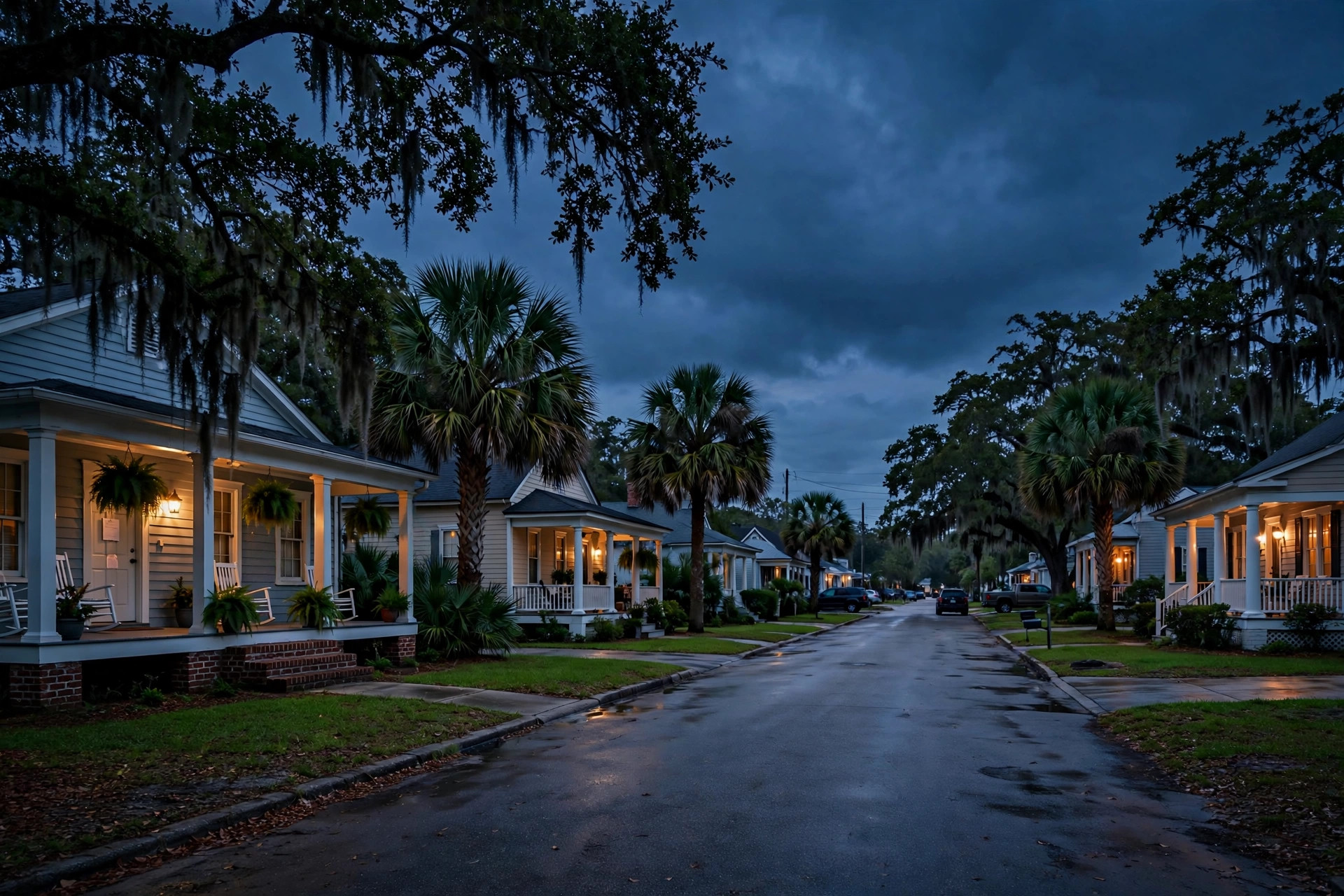
In August 2026, one in every 1,501 housing units in the Charleston metro area had a foreclosure filing. That made Charleston the fifth-worst metro area in the country for foreclosure rate, out of every metro with at least 200,000 people.
Three of the five worst metros in America are in South Carolina. Columbia posted the worst rate in the nation — one filing for every 1,232 housing units. Spartanburg was third, at one in 1,262. Charleston came in fifth.
Statewide, South Carolina has the worst foreclosure rate in the country — one filing for every 1,547 housing units, more than double the national rate of one in 3,569. I broke down the statewide numbers and the full list of options for stopping a foreclosure in that post. This one is about Charleston — what the number means here, why the Lowcountry is on the list, and what to do if one of those filings has your name on it.
ATTOM, the property-data firm that publishes these numbers, counts a property if it received any of three things: a default notice, a scheduled auction notice, or a bank repossession. A filing is the start of the legal machine, not the end of it. Many filings get cured, worked out in a loan modification, or dismissed. Some do end in a sale.
The honest reading is this: in a single month, roughly one out of every 1,500 households in Charleston, Berkeley, and Dorchester counties fell far enough behind that their lender started legal proceedings. Nationally, 40,277 properties had foreclosure filings in August, up 13 percent from a year ago. Lenders started foreclosure on 25,894 properties, up 7 percent. And completed repossessions — the cases that went all the way through — jumped 42 percent from last year. The trend is moving the wrong way, and it is moving faster here than almost anywhere else.
Insurance and assessments. ATTOM's CEO pointed to higher insurance costs, borrowing costs, and everyday expenses squeezing homeowners. Coverage of the same report has hammered on homeowner's insurance premiums, condominium assessments, and HOA fees as the costs pushing owners over the edge across the Southeast. Anyone who has opened a renewal notice on a coastal South Carolina home lately does not need a study to believe it. When the escrow portion of the payment jumps a few hundred dollars a month, a budget that worked in 2023 stops working.
Thin equity from recent purchases. Analysts covering the report note that filings are concentrated among people who bought in 2022 or later — peak prices, high rates, very little money down. A buyer who put 3 percent down and watched values flatten has no cushion. If the payment becomes unpayable, selling doesn't solve it, because the home may not cover the loan, the closing costs, and the arrears. Refinancing doesn't solve it either at today's rates. That is the trap underneath a lot of these filings.
VA loans and Joint Base Charleston. Several of South Carolina's hardest-hit markets have large military populations and heavy concentrations of VA loans. A VA loan is a good product — no down payment, no monthly mortgage insurance. But zero down means zero equity on day one, and a service member who bought near Joint Base Charleston in 2022 or 2023 and then got orders, a rate reset on household income, or an insurance shock has very little room to absorb it. ATTOM flagged Dorchester County — Summerville and the fast-growing commuter corridor — as one of the highest-rate counties in the state. That is exactly where a lot of those buyers landed.
One more thing, because it matters for perspective: ATTOM's CEO also said foreclosure volumes remain well below historical norms. This is not 2008. It is a real increase concentrated in specific places and specific households — and Charleston is one of those places.
With filing rates like these, the tri-county foreclosure dockets are carrying heavier caseloads than they have in years. Do not mistake a crowded docket for extra time. The deadlines that can hurt you — starting with your deadline to answer the lawsuit — run on schedule whether the court is busy or not. A slow system does not protect a homeowner who does nothing. It just means the homeowners who do act have more room to work with: South Carolina's process takes months, you remain in your home until a sale is complete and ownership transfers, and options like loan modification, repayment plans, and short sales stay open while the case is pending. But the state also allows deficiency judgments, so walking away without a plan can follow you long after the sale.
I covered the full statewide framework — every option, the deficiency rules, the credit consequences — in the companion post: SC Has the Worst Foreclosure Rate: How to Stop Yours. For how foreclosure defense works in practice, see my foreclosure defense page.
1. Open the mail and calendar your deadline. If you have been served with a foreclosure complaint, you have 30 days from service to file a written answer with the Clerk of Court under Rule 12(a) of the South Carolina Rules of Civil Procedure. Miss it and the lender can take a default judgment — the court treats its claims as admitted and you lose the right to defend. Certified mail you are afraid to open is how most foreclosures are lost.
2. Call your servicer and start loss mitigation — in parallel, not instead. Ask about forbearance, a repayment plan, or a loan modification, and get every promise in writing. But understand: negotiations do not stop the lawsuit. The case keeps moving while you talk. File the answer and work the modification.
3. Make the lender prove the number. Request an itemization of everything the servicer says you owe. Escrow mistakes — a wrong cushion, force-placed insurance you never needed, payments applied to the wrong bucket — are common, and every error is leverage. If your payment jumped and the math doesn't add up, my post on mortgage escrow errors and your RESPA rights walks through what servicers are actually allowed to collect.
4. Talk to a local foreclosure defense lawyer early. The defenses that work — bad accounting, standing problems, procedural errors, skipped federal steps — get harder to raise the longer you wait. So do the workout options. If you are 60 or more days behind, or you have been served, that conversation should happen now, not after the answer deadline.
If you are behind on your mortgage or you have been served with foreclosure papers, call Traywick Law Offices at (843) 343-5092 or reach out through the contact page. Bring your last mortgage statement and anything the court or the servicer has sent you. The first question is simple: how much time do you have, and which options are still open? Let's answer it before the calendar does.
Source: ATTOM August 2026 U.S. Foreclosure Market Report (released September 17, 2026).
Three of the five worst metros in America are in South Carolina. Columbia posted the worst rate in the nation — one filing for every 1,232 housing units. Spartanburg was third, at one in 1,262. Charleston came in fifth.
Statewide, South Carolina has the worst foreclosure rate in the country — one filing for every 1,547 housing units, more than double the national rate of one in 3,569. I broke down the statewide numbers and the full list of options for stopping a foreclosure in that post. This one is about Charleston — what the number means here, why the Lowcountry is on the list, and what to do if one of those filings has your name on it.
What does 1 in 1,501 actually mean?
It does not mean one in 1,501 Charleston homes was lost to foreclosure in August. It means one in 1,501 had a foreclosure filing at some stage of the process.ATTOM, the property-data firm that publishes these numbers, counts a property if it received any of three things: a default notice, a scheduled auction notice, or a bank repossession. A filing is the start of the legal machine, not the end of it. Many filings get cured, worked out in a loan modification, or dismissed. Some do end in a sale.
The honest reading is this: in a single month, roughly one out of every 1,500 households in Charleston, Berkeley, and Dorchester counties fell far enough behind that their lender started legal proceedings. Nationally, 40,277 properties had foreclosure filings in August, up 13 percent from a year ago. Lenders started foreclosure on 25,894 properties, up 7 percent. And completed repossessions — the cases that went all the way through — jumped 42 percent from last year. The trend is moving the wrong way, and it is moving faster here than almost anywhere else.
Why is Charleston's foreclosure rate so high?
No single cause puts a metro area fifth in the nation. It is a stack of costs landing on the same households at the same time.Insurance and assessments. ATTOM's CEO pointed to higher insurance costs, borrowing costs, and everyday expenses squeezing homeowners. Coverage of the same report has hammered on homeowner's insurance premiums, condominium assessments, and HOA fees as the costs pushing owners over the edge across the Southeast. Anyone who has opened a renewal notice on a coastal South Carolina home lately does not need a study to believe it. When the escrow portion of the payment jumps a few hundred dollars a month, a budget that worked in 2023 stops working.
Thin equity from recent purchases. Analysts covering the report note that filings are concentrated among people who bought in 2022 or later — peak prices, high rates, very little money down. A buyer who put 3 percent down and watched values flatten has no cushion. If the payment becomes unpayable, selling doesn't solve it, because the home may not cover the loan, the closing costs, and the arrears. Refinancing doesn't solve it either at today's rates. That is the trap underneath a lot of these filings.
VA loans and Joint Base Charleston. Several of South Carolina's hardest-hit markets have large military populations and heavy concentrations of VA loans. A VA loan is a good product — no down payment, no monthly mortgage insurance. But zero down means zero equity on day one, and a service member who bought near Joint Base Charleston in 2022 or 2023 and then got orders, a rate reset on household income, or an insurance shock has very little room to absorb it. ATTOM flagged Dorchester County — Summerville and the fast-growing commuter corridor — as one of the highest-rate counties in the state. That is exactly where a lot of those buyers landed.
One more thing, because it matters for perspective: ATTOM's CEO also said foreclosure volumes remain well below historical norms. This is not 2008. It is a real increase concentrated in specific places and specific households — and Charleston is one of those places.
What does this mean in Charleston, Berkeley, and Dorchester counties?
Foreclosure in South Carolina is judicial. A lender cannot sell your home with a notice and an auctioneer the way it can in some states. It has to file a lawsuit, serve you, and get a court order. Foreclosure cases here are typically referred to the Master-in-Equity, and judicial sales are held on the regular sale day — the first Monday of each month — at the county courthouse.With filing rates like these, the tri-county foreclosure dockets are carrying heavier caseloads than they have in years. Do not mistake a crowded docket for extra time. The deadlines that can hurt you — starting with your deadline to answer the lawsuit — run on schedule whether the court is busy or not. A slow system does not protect a homeowner who does nothing. It just means the homeowners who do act have more room to work with: South Carolina's process takes months, you remain in your home until a sale is complete and ownership transfers, and options like loan modification, repayment plans, and short sales stay open while the case is pending. But the state also allows deficiency judgments, so walking away without a plan can follow you long after the sale.
I covered the full statewide framework — every option, the deficiency rules, the credit consequences — in the companion post: SC Has the Worst Foreclosure Rate: How to Stop Yours. For how foreclosure defense works in practice, see my foreclosure defense page.
I've fallen behind — what do I do first?
Four things, in this order.1. Open the mail and calendar your deadline. If you have been served with a foreclosure complaint, you have 30 days from service to file a written answer with the Clerk of Court under Rule 12(a) of the South Carolina Rules of Civil Procedure. Miss it and the lender can take a default judgment — the court treats its claims as admitted and you lose the right to defend. Certified mail you are afraid to open is how most foreclosures are lost.
2. Call your servicer and start loss mitigation — in parallel, not instead. Ask about forbearance, a repayment plan, or a loan modification, and get every promise in writing. But understand: negotiations do not stop the lawsuit. The case keeps moving while you talk. File the answer and work the modification.
3. Make the lender prove the number. Request an itemization of everything the servicer says you owe. Escrow mistakes — a wrong cushion, force-placed insurance you never needed, payments applied to the wrong bucket — are common, and every error is leverage. If your payment jumped and the math doesn't add up, my post on mortgage escrow errors and your RESPA rights walks through what servicers are actually allowed to collect.
4. Talk to a local foreclosure defense lawyer early. The defenses that work — bad accounting, standing problems, procedural errors, skipped federal steps — get harder to raise the longer you wait. So do the workout options. If you are 60 or more days behind, or you have been served, that conversation should happen now, not after the answer deadline.
Foreclosure defense in Charleston — talk to a local lawyer
My firm is in Charleston, and foreclosure defense is a core part of what I do. I represent homeowners across Charleston, Berkeley, and Dorchester counties — answering foreclosure complaints, forcing lenders to prove their numbers, and working out modifications, repayment plans, and exits that don't leave a deficiency hanging over you.If you are behind on your mortgage or you have been served with foreclosure papers, call Traywick Law Offices at (843) 343-5092 or reach out through the contact page. Bring your last mortgage statement and anything the court or the servicer has sent you. The first question is simple: how much time do you have, and which options are still open? Let's answer it before the calendar does.
Source: ATTOM August 2026 U.S. Foreclosure Market Report (released September 17, 2026).