Selective Enforcement: When Your HOA Punishes You but Not Your Neighbor
"My neighbor has the exact same violation and didn't get fined." It's the most common HOA grievance in South Carolina — and the trickiest to win in court. No published South Carolina case hands a homeowner victory under a pure "selective enforcement" label. But the wins exist under different names: waiver, presumption of compliance, and balancing of the equities. Here's how the law actually works, and how to build the case.
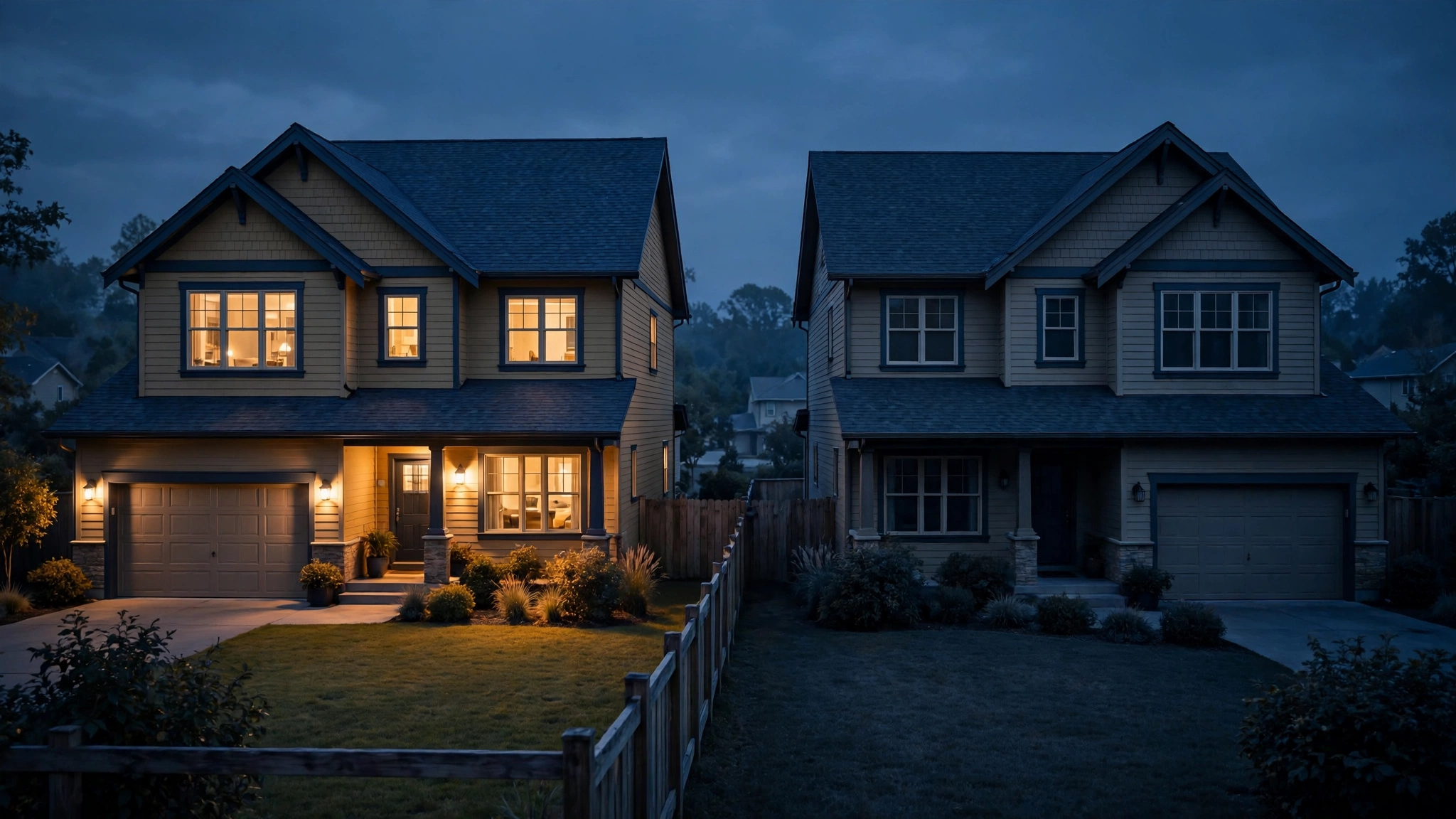
"My neighbor has the exact same violation and didn't get fined."
If you own a home in a South Carolina HOA, you've either said that sentence or heard it. It is the single most common grievance in HOA life — SCDCA data puts covenant-enforcement complaints at the top of the list, 16.8% of all concerns raised, and consumers already use the legal term: "selective enforcement" is one of the highest-value search phrases in this entire area of law.
Here's the hard truth first, because a lawyer who won't tell you this isn't doing their job: no published South Carolina case hands a homeowner a win under a pure "selective enforcement" label. The doctrine, standing alone, is thinner than homeowners expect. But the wins are real — they just come under different names: waiver, presumption of compliance, and balancing of the equities. This post explains the law as it actually is, the cases that actually help, and how to build a selective-enforcement case that a South Carolina court will take seriously. For the full map, see our South Carolina HOA homeowner rights guide; for the closest cousins of this fight, see the posts on architectural review denials, HOA board bad faith, and HOA fines and violation letters.
What "Selective Enforcement" Means — and Why Courts Are Skeptical of the Label
Selective enforcement, as homeowners use it, means the HOA enforces a rule against me while ignoring the same rule against others — especially board members, their friends, or the people who don't complain. The enforcement feels personal because it usually is personal: somebody reported you, or the board president doesn't like you, or you ran for the board last year.
Courts are skeptical of the label for a practical reason. Perfectly uniform enforcement is impossible — no HOA catches every violation — and a rule that let every violator off because some other violator escaped would make covenants unenforceable. Judges worry, not unreasonably, that "selective enforcement" becomes a universal excuse: admit the violation, point at the neighbor, walk away.
That doesn't mean uneven enforcement is legally irrelevant. It means the argument has to be channeled through doctrines courts recognize. South Carolina gives you three: waiver, the declaration's own presumption of compliance, and the equitable balancing courts must do before ordering you to tear something down. Each has real case law behind it. None of them is called "selective enforcement" — and that's exactly why they work.
Waiver: When the HOA Waited Too Long to Enforce
The strongest uneven-enforcement doctrine in South Carolina is waiver: a party that knowingly sits on its rights can lose them.
The leading case is Janasik v. Fairway Oaks Villas Horizontal Property Regime, 307 S.C. 339, 415 S.E.2d 384 (1992). The regime knew about a covenant violation and failed to bring an enforcement claim until after the owners had spent a substantial amount on improvements. The Supreme Court held the regime had waived its right to enforce. The principle: you can't watch someone build, wait until the money is spent, and then demand demolition.
Waiver has teeth in the classic selective-enforcement fact patterns. The HOA that ignored your fence for three years — while fining others for theirs — then suddenly demands removal after you've landscaped around it. The board that knew about the identical violation on the president's own lot for a decade and never sent a letter. Delay plus knowledge plus your detrimental reliance: that's waiver, and South Carolina courts enforce it.
What waiver requires you to prove: that the HOA knew about the violation (or the identical violations it ignored), that it failed to act for a meaningful period, and that you changed your position in reliance — you built, you spent, you planted, you relied on the quiet. The longer the silence and the bigger the expenditure, the stronger the claim. "They knew and said nothing until I'd spent $20,000" is a waiver case. "They fined me the week I built it" usually isn't.
The Presumption of Compliance: Cedar Cove v. DiPietro
The most useful homeowner win in South Carolina covenant-enforcement law is Cedar Cove Homeowners Ass'n v. DiPietro, 368 S.C. 254, 628 S.E.2d 284 (Ct. App. 2006) — and it's a selective-enforcement story wearing a different label.
Rudy and Margaret DiPietro built a brick patio that slightly encroached on the common area, following the community's longstanding informal approval process: the ARC member reviewed the sketch, helped lay out the location, and the board president approved it. Then new officers were elected, "the days of lax governance were over," and the new board sued for a mandatory injunction to rip the patio out.
The court of appeals reversed the injunction on two grounds. First, the declaration itself contained a presumption: if no disapproval is issued and no suit to enjoin construction is commenced before substantial completion, "it shall be presumed that the party has fully complied with this restriction." The HOA never formally disapproved, waited months after the patio was substantially complete, and then sued. The presumption applied.
Second — and this is the line to remember — the court held: "The Association, which claims a desire for strict compliance with the covenants, may not escape from its own lack of compliance with the restrictive covenants." The HOA's own lax history — informal approvals, ignored procedures, an unchallenged identical encroachment by a prior owner, months of delay — defeated its demand for strict compliance against the DiPietros.
That's selective enforcement winning in court. The HOA wanted strict rules for the DiPietros after years of loose practice for everyone else, and the court wouldn't allow it. The lesson for your case: the HOA's own history is evidence. Get the records of how it treated identical situations — prior approvals, ignored violations, delayed enforcement. A board demanding strict compliance it never practiced is standing on the Cedar Cove trapdoor.
Balancing the Equities: Why Courts Don't Always Order Tear-Down
Even where a violation is proven, South Carolina courts don't automatically order removal. In Sea Pines Plantation Co. v. Wells, 294 S.C. 266, 363 S.E.2d 891 (1987), the Supreme Court held that "a court does not automatically issue a mandatory injunction once it finds a restrictive covenant has been violated" — the court must balance the equities between the parties, and if the harm to the defendant outweighs the plaintiff's benefit, no injunction issues.
This is where selective enforcement does its quiet work. The balancing test weighs your harm (tear out the patio, the fence, the addition — tens of thousands of dollars) against the HOA's benefit (strict uniformity). When the HOA tolerated the identical condition elsewhere — the neighbor's identical fence, the prior owner's identical encroachment — the "benefit" side of the scale gets very light. What exactly is the association protecting by making you tear down what it let stand next door?
Combine the three doctrines and you have the real selective-enforcement playbook: waiver where the HOA slept on its rights, presumption of compliance where the declaration provides it, and balancing of the equities where the HOA's own inconsistency undercuts its claim to need strict enforcement. No single case says "selective enforcement wins." Together, they say something better: an HOA that enforces unevenly, after delay, against its own history, loses.
Sudden Enforcement of Dormant Rules: The Waterbridge Pattern
One fact pattern deserves special attention because it's surging in South Carolina: the HOA that wakes up a rule that slept for years and starts fining.
In Carolina Forest's Waterbridge community, the HOA began enforcing a no-street-parking rule that had been on the books since 2006 — with $25-per-day fines — after nearly two decades of non-enforcement. Residents described the impact on families with teen drivers and guests; one neighbor was fined after parking briefly to clean out a garage. The rule was always there. Nobody followed it. Then suddenly everybody had to.
Dormant-rule enforcement sits at the intersection of waiver and fairness. Two decades of non-enforcement is powerful waiver evidence — the HOA knew, or should have known, that the community's settled practice was otherwise. And the equities balancing is brutal for the HOA: what community interest is served by fining a homeowner for conduct the association tolerated for twenty years? If your HOA just discovered a rule it ignored for years, document the history of non-enforcement before the board rewrites it. Photographs, neighbor statements, old newsletters showing the tolerated practice — build the record of what the community actually was, not what the board now claims it always was.
"Approved for My Neighbor, Denied for Me": The ARC Version
The most common selective-enforcement complaint with an architectural-review flavor goes like this: "HOA approved my neighbor but denied me" — same fence, same paint color, same shed, different answer.
This variant has its own legal texture. Architectural review boards have discretion — in River Hills Property Owners Ass'n v. Amato, 326 S.C. 255, 487 S.E.2d 179 (1997), the Supreme Court upheld an ARB's aesthetic denial — but that discretion is "constrained only by reasonableness and good faith." A board that approves one owner's application and denies an identical one without a reasoned distinction has a reasonableness problem, and where the distinction tracks personal favoritism or retaliation, a good-faith problem too.
The Pawleys Plantation lawsuit, reported by the Coastal Observer in November 2025, shows the institutional version: homeowners sued alleging the architectural review board never met and its chairman approved a two-story home project unilaterally, skipping the ARB's own procedures. When the process itself is irregular — no meeting, no quorum, one person deciding — every approval and denial from that process is suspect, and the "why did they get approved" question becomes evidence about how the board operates, not just about your application.
If you're in this spot, get both files: your denial and the neighbor's approval. Compare the applications, the dates, the stated reasons. If the board can't articulate a real difference between the two — topography, setback, materials, sightlines — the denial looks arbitrary. And arbitrary denials, unlike reasoned ones, don't survive judicial review. Our full treatment of denial fights is in the post on architectural review denials.
The Retaliation Variant: Punished for Complaining
The ugliest selective-enforcement cases aren't about inconsistency — they're about retaliation. The homeowner complains, hires a lawyer, runs for the board, files a records request — and suddenly the violation letters start arriving.
The Reserve, on Pawleys Island, is the reported example: after homeowner Elizabeth Gregg consulted an attorney about ARB compliance, the association insisted she communicate only through counsel — and after her complaints, the HOA adopted a policy making all documents confidential unless board-approved. Whether any individual retaliation claim succeeds turns on proof of motive, which is why the timeline matters: chart the date of your complaint against the date of the first enforcement action. Enforcement that begins days after protected activity — a complaint to the board, a records request, a lawyer's letter — invites the inference.
Retaliation also shades into bad faith, which defeats the business judgment rule entirely. A board enforcing rules to punish a critic isn't exercising judgment; it's settling a score. If your enforcement file opened right after you challenged the board, say so — loudly, in writing, with dates.
Proving Uneven Enforcement: How to Document It
Selective-enforcement cases are won on comparison evidence. Start building the file the day the first letter arrives:
- Photograph the identical violations. The neighbor's identical fence, shed, paint color, parking practice. Date-stamped photos, from public areas — don't trespass.
- Get the HOA's enforcement records. Violation letters sent, fines levied, hearings held — for the whole community, not just you. Records requests are the tool; the HOA's own files are the evidence.
- Chart the timeline. When did the board learn of your violation? When did it act? How long did identical violations elsewhere go unaddressed?
- Preserve the board's statements. "We have to maintain property values" — the standard board justification — is fine in the abstract. But minutes, emails, and meeting recordings showing who the board discussed and who it didn't are better.
- Find the pattern witnesses. Neighbors with identical violations who were never contacted are your best evidence. Get their accounts in writing while memories are fresh.
- Check the board's own compliance. Are board members or their allies violating the same rule? Cedar Cove's logic applies with full force: the association demanding strict compliance it doesn't practice itself.
One caution: don't frame your defense as "my neighbor did it too" and stop there. Frame it as waiver, presumption, or equities — the doctrines courts recognize — with the neighbor evidence as proof.
When Uneven Enforcement Signals Bad Faith
There's a line where selective enforcement stops being sloppy administration and becomes something worse. A board that enforces against critics and exempts allies isn't just inconsistent — it's using its power for personal ends. Under Fisher v. Shipyard Village, bad faith and corrupt motives defeat the business judgment rule, and the jury decides.
The markers: enforcement targeted at homeowners who challenged the board; exemptions for board members' own violations; enforcement decisions made in secret without the procedures the documents require; fines that escalate against one homeowner while identical conduct goes unmentioned. Any one of these can be sloppiness. Together, they're a pattern — and patterns prove motive.
Where the conduct also involves deception — misrepresenting what the documents require, hiding the enforcement records, fining under rules that were never properly adopted — the South Carolina Unfair Trade Practices Act may supply what the common-law doctrines don't: treble damages and attorney's fees for unfair or deceptive practices.
What to Do When Your HOA Targets You
In order, cheapest first: document everything (photos, letters, timelines, the neighbor comparisons). Request the HOA's enforcement records in writing. Respond to every violation letter in writing, on time — never ignore them, because ignored letters become fines, liens, and foreclosure files. Raise waiver, presumption of compliance, and the HOA's own inconsistent history at the hearing the documents require. If the board won't hold a fair hearing, or the fines keep coming regardless of the evidence, that's when the dispute moves to court — declaratory judgment on the covenant's meaning, an injunction against the enforcement, and damages for what the campaign cost you.
Your HOA doesn't get to have it both ways: lax for its friends, strict for you. South Carolina courts have said so — just not in those words. If your board is punishing you for what it tolerates in others, Traywick Law Offices can analyze the dispute and push for a favorable resolution efficiently. To get started, request a legal opinion from Traywick Law Offices.