What to Do After a Car Wreck in South Carolina: The Steps That Protect Your Claim
A car wreck in South Carolina triggers legal duties — and the steps you take in the hours after the crash decide whether your injury claim survives. This guide covers what the law requires, the mistakes that kill claims, and when to call a lawyer.
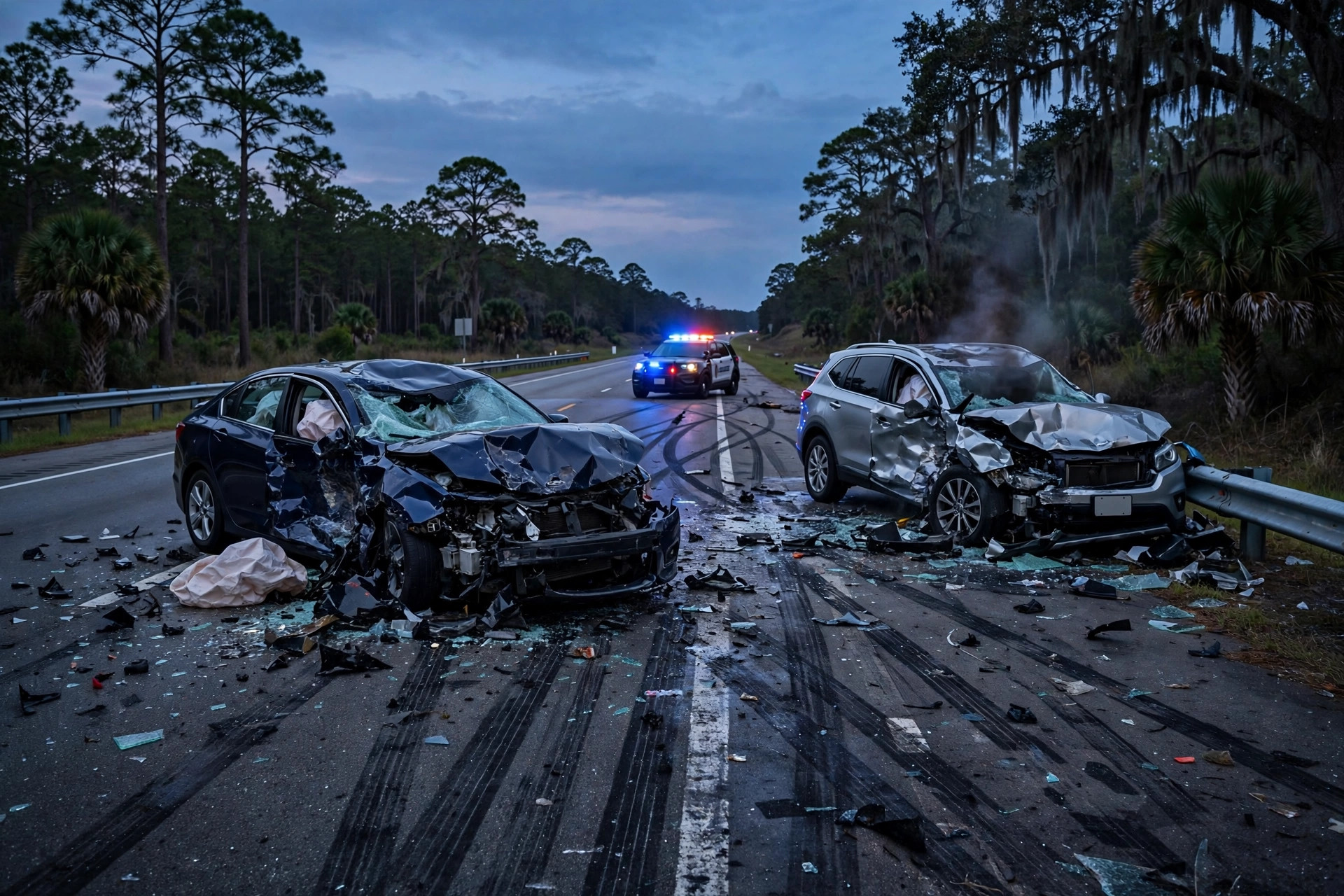
The minutes after a car wreck are disorienting. You are checking yourself for injuries, dealing with the other driver, and trying to think straight while your heart is pounding. If you are wondering what to do after a car accident in South Carolina, know this: the steps you take in the first hours decide whether your injury claim survives or collapses. South Carolina law imposes specific duties on drivers after a crash, and insurance companies start building their defense the day of the wreck. This guide walks through exactly what the law requires, what experienced car accidents lawyers tell clients to do at the scene, and the five mistakes that destroy otherwise valid claims.
What to Do After a Car Accident in South Carolina: Steps at the Scene
First, stop and stay. S.C. Code § 56-5-1210(A) requires a driver in a crash causing injury or death to stop at the scene, or as close as possible, and remain there until fulfilling the duties in § 56-5-1230: give your name, address, and vehicle registration number to the other driver, and render reasonable aid to anyone injured, including calling for medical help if needed. You may leave the scene temporarily only to report the crash. Driving away is a crime: hit-and-run causing injury is a misdemeanor, and if death results it is a felony carrying up to 25 years in prison. The DMV also revokes the license of a driver who leaves the scene.
Second, call 911 and check for injuries. Even if no one looks hurt, ask. Adrenaline masks pain, and soft-tissue and head injuries often surface hours or days later.
Third, document everything while you are still there. Photograph both vehicles from multiple angles, the positions of the cars, skid marks, debris, traffic signs, road conditions, and any visible injuries. Exchange names, phone numbers, driver's license numbers, license plate numbers, and insurance information with the other driver. Get names and phone numbers of witnesses — independent witnesses win cases. Note the exact location, time, and weather.
Fourth, do not admit fault or apologize for the crash. Saying "I'm sorry" or "I didn't see you" can be used against you later. South Carolina divides fault under S.C. Code § 15-38-15, and Nelson v. Concrete Supply Co., 303 S.C. 243, 399 S.E.2d 783 (1991) holds that a plaintiff who is more than 50% at fault recovers nothing. A careless sentence at the scene can become the evidence the other side uses to push your share of fault past that line. Be polite, exchange information, and leave the fault determination to the evidence.
Car Wreck: What Should I Do About Medical Care?
Car wreck — what should I do if I feel fine? Get checked anyway. Emergency rooms and urgent-care clinics see wreck injuries every day, and adrenaline can hide pain from fractures, whiplash, concussions, and internal injuries for hours. Tell the provider exactly what happened so the medical records tie your injuries to the crash. Those records become the backbone of your claim: they establish when the injury occurred, what it is, and what treatment costs.
Follow the treatment plan you are given. If the doctor orders physical therapy, imaging, or a specialist visit, go. Missed appointments and skipped treatment do more than slow your recovery — they give the insurance company its favorite argument, which we cover below.
Should I Call Police After a Car Accident in SC?
Yes. And in many cases the law requires it. S.C. Code § 56-5-1260 provides that a driver in a crash involving injury or death must immediately report the crash to the local police department if it happened in a municipality, to the county sheriff, or to the nearest office of the South Carolina Highway Patrol.
Even when no one is visibly hurt, call. A responding officer secures the scene, takes statements from both drivers and witnesses, notes road and weather conditions, and issues citations when warranted. That officer's observations carry weight with insurance adjusters and juries precisely because the officer has no stake in the outcome. If the other driver begs you not to call police, that is a reason to call — not a reason to skip it.
Car Accident Police Report South Carolina: Getting a Copy
Every crash the police respond to generates a car accident police report in South Carolina, and that report is one of the most important documents in your case. It typically records the drivers, vehicles, insurance information, witness identities, a diagram of the crash, the officer's narrative of how the wreck happened, and any citations issued. Adjusters read it first.
Get a copy as soon as it is available, usually within a few days of the crash, from the responding agency — the city police department, the county sheriff's office, or the Highway Patrol. Read it carefully. If it contains errors — wrong vehicle positions, a misspelled witness name, a fact the officer got wrong — contact the agency about a correction or supplemental statement promptly. A report that goes unchallenged becomes the official story.
Do I Have to Report a Car Accident in South Carolina to the DMV?
Sometimes, yes — and missing this deadline creates its own problem. S.C. Code § 56-5-1270 applies when a crash was not investigated by law enforcement and involved injury or death, or apparent property damage of $1,000 or more. In that situation, the operator or owner of each vehicle involved must forward a written report of the crash to the South Carolina DMV within 15 days, along with verification of liability insurance coverage in effect at the time.
This is the rule that surprises people. If the police never came to the scene — say both drivers agreed to handle it privately, or the crash happened on private property — and the damage looks like it exceeds $1,000, the 15-day written-report duty applies. It runs to the DMV, not to the other driver's insurer, and it includes proof that you were insured. File it even if you are unsure whether the threshold is met; over-reporting costs you nothing, while an unreported crash can complicate your claim and your driving record.
Car Accident Mistakes to Avoid That Can Kill Your Claim
Most damaged claims are not damaged by the facts of the wreck. They are damaged by what the injured person did afterward. These are the car accident mistakes to avoid:
Mistake 1: Admitting fault at the scene. Covered above — politeness is fine, apologies are evidence.
Mistake 2: Repairing or disposing of the car before it is documented. Your vehicle's damage is evidence of how violent the impact was, and insurers love to argue a crash was minor when there are no photos. Photograph the damage thoroughly before any repair, and if the car is totaled, get photos before it goes to the salvage yard. Keep repair estimates and receipts.
Mistake 3: Giving a recorded statement to the other driver's insurer. Covered in detail below — the short version is don't.
Mistake 4: Gaps in medical treatment. Covered in detail below — keep every appointment.
Mistake 5: Waiting too long to act. South Carolina gives you three years to file a personal-injury lawsuit under S.C. Code § 15-3-530(5), which covers "an action for ... any injury to the person." Three years sounds generous until evidence disappears: witnesses move, memories fade, surveillance video is overwritten, and vehicles are repaired or scrapped. Do not sit on your rights.
Recorded Statement Insurance Adjuster: Why You Should Not Give One
Within days of the crash, the other driver's insurance company will call. The adjuster will sound friendly and ask for a recorded statement "just to get your side of the story." Understand what is happening: that recorded statement to an insurance adjuster is not taken for your benefit. It is taken to lock you into a version of events before you know the full extent of your injuries, and to fish for sentences the company can use to deny or discount your claim.
You are not legally required to give the other driver's insurer a recorded statement. Common traps include asking how you feel before you have seen a doctor (your "I'm okay" becomes Exhibit A), asking leading questions about speed and attention, and getting you to estimate things — distances, times, speeds — that you cannot accurately estimate under stress. Politely decline, and refer the adjuster to your lawyer. Your own insurer has different duties under your policy, and you should still report the crash to your own company — but let your lawyer handle the other side's calls.
Gap in Medical Treatment Car Accident: How Delays Undermine Claims
A gap in medical treatment after a car accident is the single most common reason adjusters slash settlement offers. The logic they use is simple and effective: if you were really hurt, you would have kept going to the doctor. A three-week gap between the emergency room visit and the next appointment becomes, in the adjuster's file, evidence that you recovered — or that something else caused your pain.
This is unfair, because real life intervenes: people miss appointments because of work, childcare, transportation, or because the pain temporarily eased. But the insurance company does not care why. Protect yourself by treating consistently, rescheduling promptly when you must miss, and telling your providers about every symptom at every visit so the records are complete. Adrenaline masks pain in the first hours; consistent follow-up care documents what the adrenaline was hiding.
Social Media and Your Car Accident Claim: Stop Posting
Assume the insurance company is reading your social media. Because it is. Adjusters and defense lawyers routinely pull Facebook, Instagram, and TikTok posts looking for anything that contradicts your injury claim. A photo of you smiling at a cookout, a check-in at a hiking trail, a status update about a busy weekend — each one becomes an argument that you are not as hurt as you say, even when the photo was taken before the crash or you spent the whole event sitting in a chair in pain.
Do not post about the wreck, your injuries, your treatment, your lawyer, or the other driver. Ask friends and family not to tag you or post photos of you. Review your privacy settings, but understand that privacy settings do not stop a court-ordered production of your posts. The safest rule for the life of your claim: if you would not want it read aloud in a courtroom, do not put it online.
When to Call a Car Accident Lawyer: A Charleston Car Wreck Attorney Explains
So when to call a car accident lawyer? The honest answer is that some fender-benders with no injuries resolve fine without one. But call sooner rather than later when any of the following are true: you were injured and needed medical treatment; fault is disputed or the other driver is blaming you; the crash involved a commercial truck, a rideshare vehicle, or a government vehicle; the other driver was uninsured or fled the scene; the insurer is delaying, denying, or pressuring you to settle quickly; or someone was killed. Wrongful-death and serious-injury cases should involve a lawyer from the start — the mistakes described above are hardest to undo after they happen.
Time matters for a legal reason too. Evidence degrades, and South Carolina's three-year filing deadline under S.C. Code § 15-3-530(5) is absolute: miss it and the courthouse door closes. Early advice also costs you nothing to get.
What a South Carolina Personal Injury Lawyer Does With Your Case
When a South Carolina personal injury lawyer evaluates a wreck case, three questions control everything: who was at fault and can it be proved, what are the documented injuries and their costs, and what insurance coverage is available to pay. A lawyer preserves the evidence that answers the first question — the police report, witness statements, photos, vehicle data, and surveillance footage before it is erased. The lawyer builds the second answer from your medical records and bills, lost-wage documentation, and expert opinions when needed. And the lawyer finds every applicable policy: the at-fault driver's liability coverage, your own underinsured motorist coverage, and any umbrella policies.
Whether you have leverage depends on your facts — the strength of the liability evidence, the severity and documentation of your injuries, and the coverage available. That assessment requires someone who handles these cases every day.
If you were hurt in a wreck in South Carolina, get a free consultation to find out where you stand. Contact Traywick Law Offices at (843) 343-5092, or request a legal opinion intake online and we will review what happened and tell you the next step that protects your claim.
This article is for informational purposes only and is not legal advice. Every case turns on its own facts, and nothing here creates an attorney-client relationship.