Seller Hid Defects in Your South Carolina Home? Your Rights When the Disclosure Was a Lie
You closed on your South Carolina home, moved in, and then found it: black mold behind the drywall, water pouring in every time it rains, a foundation cracked clean through. The seller's disclosure form said "no" to every defect question — or said "no representation" to all of them. That form was not just paperwork. Under South Carolina's Residential Property Condition Disclosure Act, a seller who knowingly hides defects faces liability for your actual damages, court costs, and potentially your attorney's fees. Here is what the law requires sellers to disclose, what "no representation" really means, when the real estate agent is on the hook too, and what to do when you discover the problem after closing.
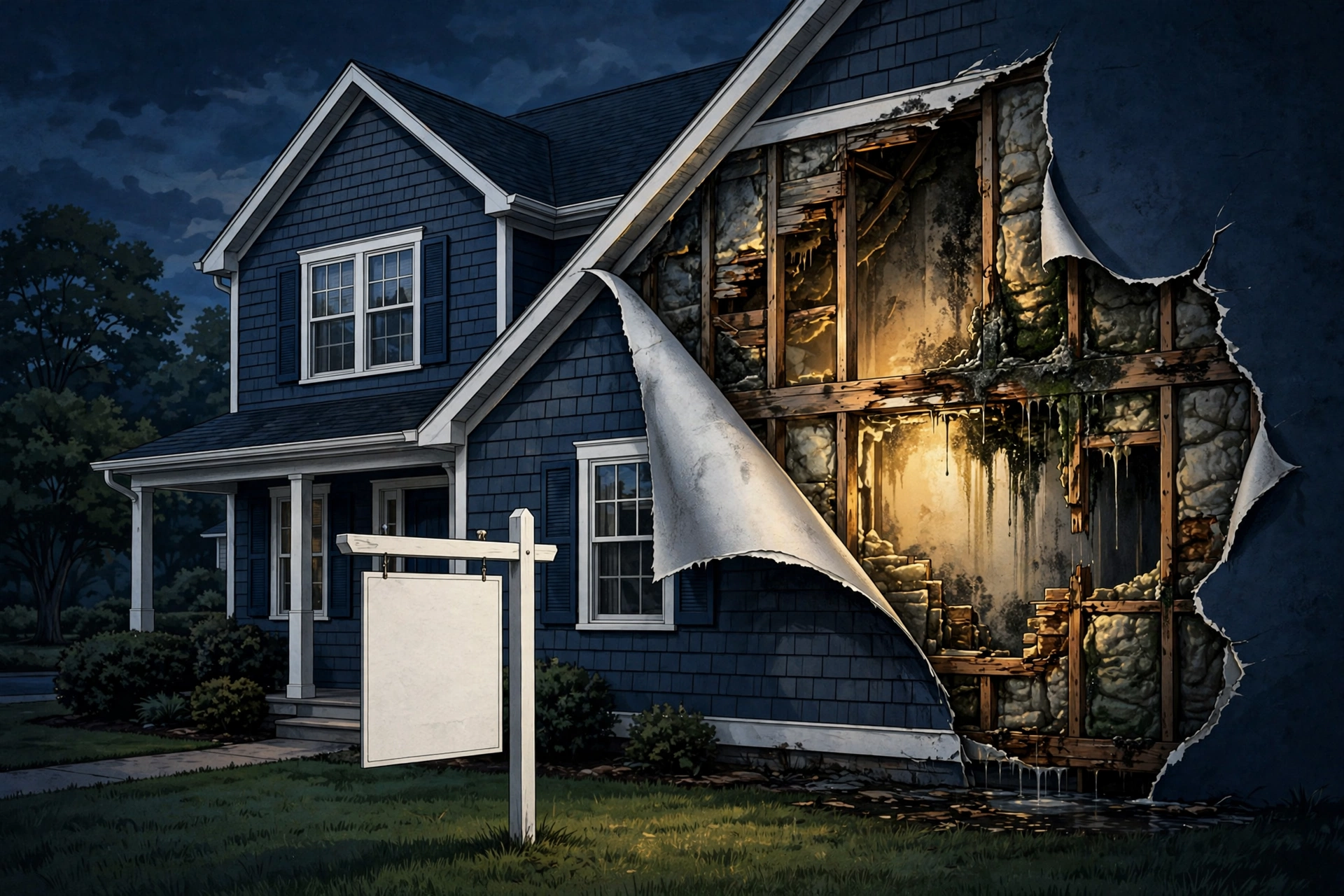
You bought the house. You closed. You moved in. Then the first hard rain came — and water ran down the inside of your living room wall. Or the home inspector you hired for a different reason pulled back a panel and found black mold spreading across the studs. Or a contractor told you the foundation crack the seller "never noticed" is an old, patched, painted-over structural failure.
The seller's disclosure form said "no" to water intrusion. "No" to mold. "No" to structural problems. Or the seller checked "no representation" down the entire form and told you nothing at all.
That was not a harmless omission. South Carolina law treats a seller's disclosure as a legal obligation, not a courtesy. When a seller who knew about a defect hides it, the buyer has claims — under the state's disclosure statute, under common-law fraud, and in many cases under the South Carolina Unfair Trade Practices Act. Here is how each one works and what you can recover.
What Is the South Carolina Property Condition Disclosure Form?
South Carolina's Residential Property Condition Disclosure Act — Title 27, Chapter 50, Article 1 of the South Carolina Code — requires the seller of residential property to give the buyer a written disclosure statement before the parties sign a contract (or as otherwise agreed in the contract itself, S.C. Code § 27-50-50(A)). The law has been on the books since 2002, and it covers sales, exchanges, installment land contracts, and leases with an option to purchase involving one to four dwelling units.
The form is standardized. The South Carolina Real Estate Commission promulgates it, and the seller must deliver it before the real estate contract is signed. This is not optional paperwork the parties can casually skip: the statute makes delivery the seller's duty, and while both sides can agree in writing not to complete a statement, that agreement has to be explicit.
Some transactions are exempt entirely — foreclosure sales, estate and fiduciary sales, transfers between co-owners or family members, the first sale of a never-inhabited new home, public auctions, and tax sales, among others. If you bought a typical resale home from a typical owner-occupant, the Act applied to your purchase.
What Must a Seller Disclose in South Carolina?
The disclosure statement covers nine categories of property condition, spelled out in S.C. Code § 27-50-40:
- The water supply and sanitary sewage disposal system.
- The roof, chimneys, floors, foundation, basement, and other structural components — and any modifications to them.
- The plumbing, electrical, heating, cooling, and other mechanical systems.
- Present infestation of wood-destroying insects or organisms, or past infestation whose damage was never repaired — termites, in other words.
- Zoning, restrictive covenants, building codes, land-use restrictions, encroachments, and notices from government agencies.
- Lead-based paint, asbestos, radon, methane, underground storage tanks, hazardous or toxic materials, and other environmental contamination.
- Existing leases or rental agreements on the property.
- Meter conservation charges on utility service.
- Whether a homeowners association governs the property.
That list covers nearly every expensive surprise a buyer can walk into: the roof that leaks, the HVAC that dies in August, the termite damage behind the siding, the basement that floods every spring. The legal standard is the seller's actual knowledge. The seller does not have to hire an inspector or go hunting for problems. But the seller must answer honestly about what the seller actually knows.
"No Representation" Does Not Protect a Seller Who Knew About the Defect
This is the most misunderstood part of the South Carolina disclosure form, and the one sellers abuse most.
For each question, the seller has three options: "yes" (I know of a problem), "no" (I am not aware of a problem), or "no representation" (I am making no representation about this condition). Many sellers — coached or not — check "no representation" down the entire form, thinking it insulates them. It does not.
The Commission's own form instructions state the rule plainly: answering "no" means the owner is stating the owner has no actual knowledge of any problem. Answering "no representation" means the owner makes no representation about the condition — but the owner still may have a duty to disclose information that is known or should have been known. And if the owner fails to check "yes" or make a disclosure while knowing there is a problem, the owner may be liable for intentional or negligent misrepresentation and may owe the purchaser actual damages, court costs, and attorney's fees.
Read that again. A seller who knew the basement flooded and checked "no representation" instead of "yes" is in the same legal position as a seller who checked "no" and lied. The checkbox is not a shield for known defects. Courts look at what the seller knew, not which box the seller checked.
Seller Didn't Disclose Mold in South Carolina — What Are My Rights?
Mold is one of the most common hidden defects in South Carolina homes, and one of the most expensive to remediate. It hides behind drywall, under sinks, inside HVAC systems, and in crawl spaces. Sellers paint over it, run dehumidifiers before showings, and check "no" on the environmental and structural questions.
If the seller knew about the mold — prior remediation invoices, insurance claims, a mold inspection report, texts to a contractor, even a distinctive pattern of painting over the same wall every year — the nondisclosure is actionable. Your claims:
Under the Disclosure Act (§ 27-50-65). An owner who knowingly discloses material information the owner knows to be false, incomplete, or misleading is liable for the actual damages proximately caused to the purchaser, plus court costs. The court may also award reasonable attorney's fees to the prevailing party.
Common-law fraud. South Carolina recognizes fraud and fraudulent concealment claims against sellers independent of the statute. A buyer must prove nine elements by clear, cogent, and convincing evidence: a representation, its falsity, its materiality, knowledge of falsity or reckless disregard, intent that it be acted upon, the buyer's ignorance, reliance, the right to rely, and resulting injury. A disclosure form full of "no" answers on questions the seller knew the true answer to satisfies the representation element.
SCUTPA. The South Carolina Unfair Trade Practices Act provides actual damages — trebled if the violation was willful — plus attorney's fees and costs. Deceptive conduct in the sale of a home fits squarely within the statute.
Mold cases are document cases. The seller's knowledge is proved through repair records, insurance claims, prior listings that mentioned the problem, contractor communications, and the testimony of neighbors or prior tenants. If you suspect the seller hid mold, preserve everything and get an independent mold assessment before you remediate — the evidence matters.
Previous Owner Hid Water Damage or Foundation Cracks — Can I Sue?
Yes — water intrusion and structural defects are the core of what the disclosure law exists to catch. They sit in categories two and three of the statutory list: roof, foundation, basement, structural components, plumbing. These are also the defects sellers most often know about, because they lived with them: the buckets in the crawl space, the sump pump that runs constantly, the foundation crack that was patched and painted before listing photos.
Proving the seller knew is the whole case. Useful evidence includes:
- Prior insurance claims for water damage.
- Contractor or engineer invoices for foundation or waterproofing work.
- The seller's own prior disclosure forms from an earlier sale attempt.
- Permits pulled — or conspicuously not pulled — for repair work.
- Statements the seller made to neighbors, tenants, or the listing agent.
- The physical character of the concealment itself: fresh paint over water stains, new drywall in one section of a basement, landscaping graded to hide a failing retaining wall. Juries understand cover-ups.
One caution the statute itself contains: § 27-50-40(C) provides that the parties' rights regarding conditions of which the owner had no actual or constructive knowledge are not affected by the article. A seller who genuinely did not know about a latent defect is not liable under the Act for failing to disclose it. Your case rises or falls on knowledge — which is why the investigation into what the seller knew, and when, comes first.
What If the Seller Never Gave Me a Disclosure Form at All?
Some buyers discover after closing that no disclosure statement was ever delivered. The statute requires delivery before the contract is signed, but § 27-50-50(B) provides that failure to provide the form does not void the agreement, does not create a title defect, and does not give anyone a reason to delay closing.
That sounds like a dead end. It is not. The same subsection ends with the critical sentence: the article does not limit any other remedy available to the purchaser under law. A missing disclosure form does not erase a fraud claim. If the seller skipped the form precisely because the seller did not want to put known defects in writing, that evasion supports the fraud case rather than defeating it. And the seller's common-law duty not to commit fraud or fraudulent concealment existed before the statute and exists independent of it.
Can I Sue the Real Estate Agent for Not Disclosing Defects?
Sometimes. The agent's liability works differently from the seller's.
Under § 27-50-70, a listing agent must inform each owner in writing of the owner's disclosure obligations. If the agent does that, the agent is not liable for the owner's refusal or failure to provide a disclosure statement. And the agent is not liable for false information in the owner's form if the agent did not know and had no reasonable cause to suspect it was false, incomplete, or misleading.
But that shield has limits. Real estate license law separately requires licensees to disclose material facts about the property that are actually known to the licensee and not disclosed by the owner. An agent who walked the property, saw the water stains, heard the seller mention the flooding, or received an inspection report flagging the foundation — and said nothing to the buyer — has exposure beyond what § 27-50-70 covers. The agent cannot hide behind the seller's form when the agent had independent knowledge.
Agent cases turn on what the agent personally knew or should have suspected. Emails between the agent and seller, showing feedback, inspection reports shared with the listing side, and the agent's own showing notes are the evidence that matters.
What Can I Recover? Damages for Hidden Defects in South Carolina
Your recovery depends on which claims you bring:
Under the Disclosure Act. Actual damages proximately caused by the violation, plus court costs. The court may award reasonable attorney's fees to the prevailing party. "Actual damages" in a nondisclosure case typically means the cost to repair the defect, the diminished value of the property, or both — whichever the evidence supports.
Fraud. Broader common-law damages, litigated under the nine-element test. Fraud claims also open the door to punitive damages in appropriate cases, which the statute alone does not provide.
SCUTPA. Actual damages, trebled for willful violations, plus attorney's fees and costs. The fee-shifting matters: it makes cases economically viable that would not be worth filing on repair costs alone.
The duty to update. If the seller learns of a material inaccuracy in the disclosure after delivering it — a roof starts leaking between disclosure and closing, for example — § 27-50-60 requires the seller to promptly deliver a corrected disclosure or make reasonable repairs before closing. A seller who discovers a problem mid-transaction and stays quiet violates the Act.
Note what the Act does not do: it does not unwind the transaction by itself. Failure to provide the form does not void the agreement. Buyers seeking to undo the deal rather than recover money are litigating under common-law fraud principles, not the disclosure statute — a strategic choice your lawyer makes based on the facts.
Does "As Is" Mean I Have No Case?
Not necessarily. Section 27-50-110 expressly permits parties to agree to sell property "as is," and many South Carolina contracts include "as is" language. Sellers often believe those two words end the conversation.
They do not end a fraud case. An "as is" clause allocates the risk of unknown conditions — it does not license the seller to lie about known ones. A seller who affirmatively misrepresents the property's condition, or who fraudulently conceals a known material defect, cannot use "as is" language as a defense to fraud. Courts distinguish between a buyer accepting the property's unknown condition and a buyer being deceived about its known condition. If the seller knew about the defect and hid it, "as is" does not save the seller.
What To Do When You Discover the Problem After Closing
Act in this order:
1. Document before you repair. Photograph and video everything. Get a licensed contractor, engineer, or mold assessor to inspect and put findings in writing, including an opinion on how long the condition has existed. Once you tear out the moldy drywall, the evidence of how bad it was — and how long it had been there — is gone.
2. Preserve the paper trail. Pull your closing file: the disclosure form, the contract, inspection reports, the MLS listing and its property descriptions. Request the seller's insurance claims history if you can. Save every communication with the seller and the agents.
3. Do not sign anything from the seller or the agent. After a defect surfaces, sellers and agents sometimes offer a small payment "to make it right" in exchange for a release. Do not sign a release without legal advice — it can extinguish claims worth far more than the offer.
4. Get a timeline of the seller's knowledge. This is where cases are won. Prior listings, permit records, contractor invoices, insurance claims, and neighbor testimony establish what the seller knew and when. A lawyer can subpoena records you cannot get on your own.
5. Mind the clock. Legal deadlines apply to these claims, and a hidden defect can complicate when the clock starts running. Do not wait months hoping the problem resolves itself. Talk to a lawyer promptly.
6. Do not confront the seller alone. Anything you say to the seller can become evidence. Let your lawyer make first contact.
I Sue Sellers and Agents Who Hide Known Defects
When a South Carolina seller checks "no" — or hides behind "no representation" — on defects the seller knew about, that is not a paperwork error. It is misrepresentation, and the law provides a remedy.
I represent buyers who discovered the truth after closing: mold the seller painted over, water intrusion the seller lived with for years, foundation failures patched and concealed, termite damage never mentioned, flooding history erased from the story of the house. I bring claims under the Residential Property Condition Disclosure Act, for common-law fraud and fraudulent concealment, and under the South Carolina Unfair Trade Practices Act — pursuing repair costs, diminished value, treble damages where the law allows, and attorney's fees.
I also pursue the real estate agents who knew and said nothing. The seller's form does not protect an agent with independent knowledge of a material defect.
If you bought a South Carolina home and found defects the seller hid, contact my office for a free consultation. Bring your disclosure form, your contract, and your inspection reports. I will tell you honestly whether you have a case — and if you do, I will pursue it.