Water Leaking Into Your Myrtle Beach Condo and Mold Growing? Who Pays When the Common Elements Fail
When water enters a Myrtle Beach condo, the first fight is over the source. Roof, exterior envelope, and shared plumbing lines are common elements the regime must address. A unit's own plumbing or appliance is that owner's problem. Your master deed draws the line, and this guide shows how to find it and enforce it.
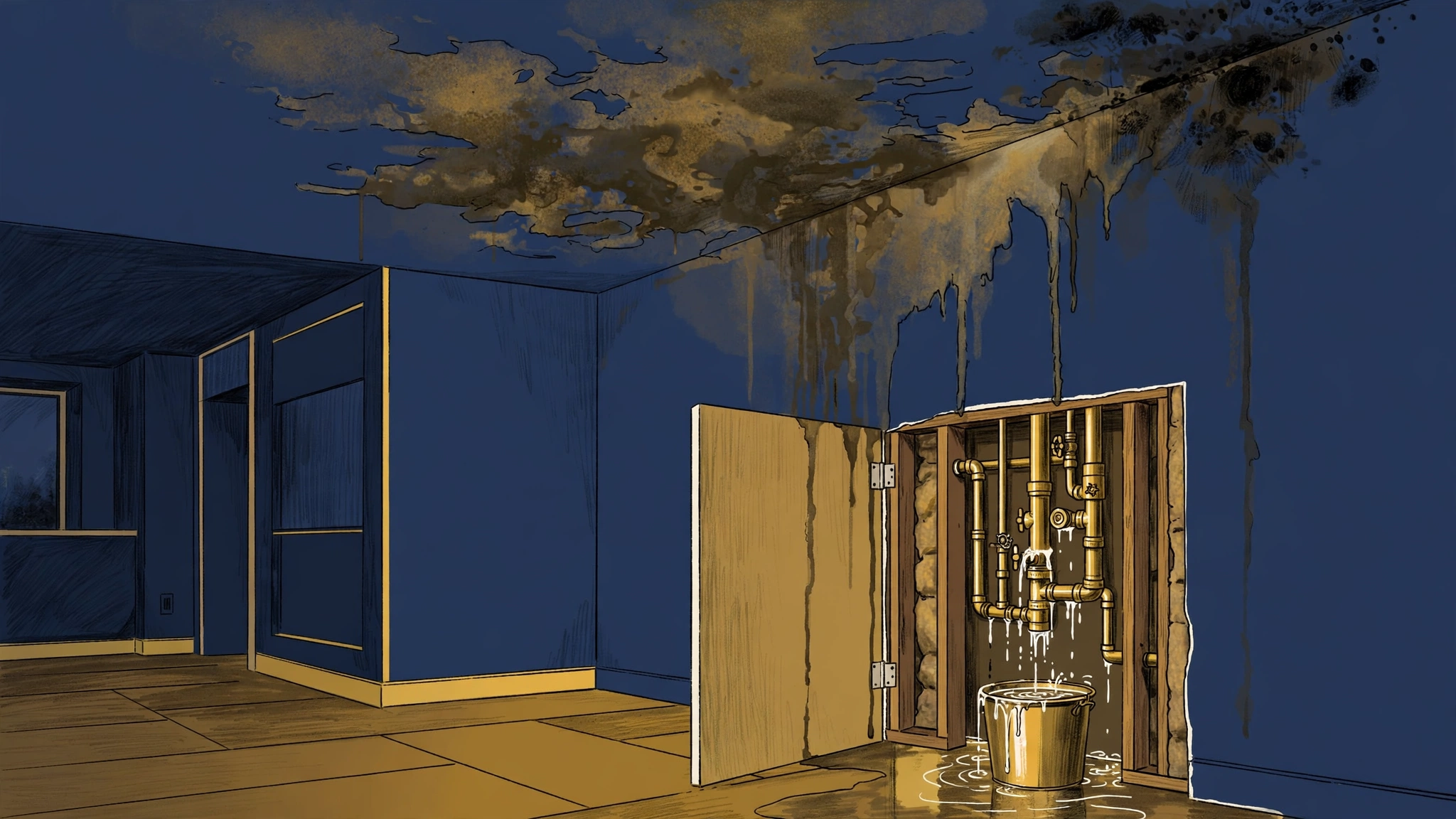
Water is coming through your ceiling or down your wall. A dark patch is spreading in the corner, and the room smells musty no matter what you run. You call the regime, and the answer is the one Grand Strand owners hear in building after building: we will send someone to look, or it may be the unit above, or it may be your own plumbing. The water keeps coming, and every week it comes, the damage grows and the mold question stops being a question.
Who pays depends first on whose component failed: the regime's common elements, or one owner's unit. The roof, the exterior envelope, and the shared plumbing lines belong to the first group. A dishwasher line, a water heater, or a failed shower valve inside one unit belongs to the second. Your master deed draws the exact line for your building, and the regime's duty to act follows from those documents. For the wider map of owner rights, see our South Carolina HOA and POA homeowner rights guide.
One boundary, stated now. Some water intrusion is a construction defect case: the building was built wrong, and the claim runs against the builder and others who built it. That case is covered in our posts on water intrusion and mold from construction defects in South Carolina condos and the South Carolina condo and HOA construction defect lawsuit. This post owns the other case: the building was built sound enough, and then it was maintained never. Roofs aged out. Sealant failed. Stacks corroded. Nobody fixed them, and now the water is in your unit.
Find the water's source first: whose pipe is it, whose roof is it?
Every leak fight opens with the same deflection. The regime says the source is inside a unit, so it is an owner problem. An owner says the source is a common element. Both sides argue responsibility before anyone has established the fact that decides it: where the water is coming from.
South Carolina law defines the common side of the line. Under § 27-31-20, the general common elements include the land, the foundations, the main walls, the roofs, the halls, lobbies, and stairways, and the compartments or installations of central services such as power, light, gas, and cold and hot water, plus every other element rationally of common use or necessary to the property's existence, upkeep, and safety. On that definition, the usual Grand Strand sources sort out this way: the roof and its drainage system are common elements; the exterior walls, window and door assemblies as the deed describes them, and the weatherproofing skin are the envelope, a common element in most regimes; the plumbing stacks and shared supply and drain lines are part of the building's central services; and the branch lines, fixtures, and appliances inside a single unit are that owner's.
Now the caution, and it is the most important sentence in this post. The responsibility boundary between the regime and the unit owner is set by your master deed. State law supplies the vocabulary and the default picture; your building's recorded master deed describes its common elements, and most master deeds carry a maintenance chart assigning item after item — roof, exterior surface, structural frame, shared lines, unit interior, fixtures — to the regime or to the owner. Two buildings on the same street in Myrtle Beach can draw the line in different places on the same component, most often on windows and balcony surfaces. Before you demand or concede, find your deed's maintenance chart and read the row for the component that failed.
Pinning down the source takes evidence, not opinions. A licensed plumber who opens a wall and photographs the failed joint, an envelope consultant who traces a stain path to a failed seal, moisture readings that show how far the water has traveled — that is the record that ends the "whose pipe" argument. Get the finding in writing, with photos.
What happens when the envelope fails: the Charleston warning and the pattern owners describe
When water enters through the envelope and no one fixes the entry point, the damage travels down inside the structure. The clearest South Carolina example in verified reporting is the Peoples Building in Charleston — a comparator from Charleston, not a Grand Strand building, and this post labels it that way. The Post and Courier reported that everyone was ordered out of the building in August 2024 after an engineer found a steel support beam in one corner so rusted that the outer wall was cracking. The corrosion was worst near the top of the building and lighter on lower levels, the pattern that shows rain entering from above rather than flood water rising from below. Old windows had let water inside, and the building's cornice — the roof-edge trim that sheds water away from the walls — had been removed years earlier. Rain came in at the top, year after year, and the structure rotted from the top down until the building had to be emptied.
The mechanism is the point. Envelope leaks are progressive: the water that spots your ceiling this season is wetting framing and fasteners you cannot see, and a reseal-and-patch repair becomes a structural repair and a full interior rebuild.
Owners in online forums describe the unit-level version in similar terms, and this post uses those accounts for the pattern only — they are forum anecdotes, not verified reports about any named Grand Strand building. In one account, an owner reported water getting in, the association answering that it would see when it could send someone, and the intrusion growing so bad that two entire walls and the floors were wet from the rain. The owner described walls so soft "you could get into them with a butter knife." The shape matches the Charleston reporting at a smaller scale: water enters through parts of the building the regime controls, the regime is slow, and the damage compounds inside walls nobody opens.
The who-pays matrix: structure, drywall, finishes, mold, and your belongings
Owners ask "who pays?" as if it were one question. It is five. Use this matrix as a starting frame, then check each row against your master deed's maintenance chart, which controls where it speaks.
The source repair. Fixing the failed component itself follows the component. A failed roof, envelope joint, or shared stack is the regime's repair, funded as a common expense. A failed appliance or fixture line inside the unit above is that owner's repair.
The structure and the common elements the water damaged. Framing, main walls, and other general common elements damaged by the water are the regime's to restore.
Drywall and interior surfaces. This is the row owners fight about most. Regimes often fix the pipe or the roof and then tell the owner the drywall, ceiling, and paint inside the unit are hers. Owners answer that but for the regime's failed component, the drywall would be whole. Which side is right turns on the master deed: many deeds assign interior surfaces and finishes to the owner even when the water came from a common element. Read the chart row for walls, ceilings, and paint before you concede or demand. Where the deed is silent or favors the owner, the argument that the party whose component failed should restore what its water destroyed is a real argument.
Finishes and belongings. Flooring, cabinets, furniture, electronics, and other personal property inside your unit are, in most buildings, the owner's loss to carry to her own insurance first. An owner whose negligence caused the leak can be liable for that loss. Photograph and list damaged belongings at once, and notify your own carrier while the liability fight proceeds.
Mold remediation. Mold follows the water and the responsibility for the space it grows in. Growth inside a common-element wall cavity, fed by a common-element leak the regime must fix, belongs with the regime's repair. Growth on interior surfaces the deed assigns to the owner, after a leak that has been fixed, usually lands on the owner. One rule holds in every version: remediation done before the source is fixed is money thrown away. Dry and repair the interior only after the failed line or entry point is proven fixed.
Section 27-31-190 binds every co-owner to contribute, in the percentages set when the regime was created, toward the expenses of administration and of maintenance and repair of the general common elements, and toward any other expense lawfully agreed upon. No owner may escape that duty by waiving use of the common elements or by abandoning the unit. The repair bill is therefore spread across all owners in their fixed shares, and a board cannot plead poverty as a legal answer.
The regime's duty to act: bylaws, upkeep, and your right of action
Owners often assume a statute somewhere says, in one line, that the regime shall maintain the common elements. South Carolina law does it in layers, and the layers matter. The Horizontal Property Act requires the regime's recorded bylaws to provide for the "care, upkeep and surveillance of the property and its general or limited common elements and services." That duty is one of the five subjects § 27-31-160 requires every regime's bylaws to cover, in subsection (c). The enforceable maintenance duty in your building therefore lives in your master deed and bylaws, which the statute forced into existence and forced the regime to record. Section 27-31-190 then supplies the money.
The enforcement provision is § 27-31-170. It requires each co-owner to comply strictly with the bylaws, with the rules lawfully adopted under them, and with the covenants and restrictions in the master deed. Failure to comply is grounds for a civil action to recover sums due for damages or injunctive relief, or both — brought by the board on behalf of the council of co-owners, or, in a proper case, by an aggrieved co-owner. The statute does not leave enforcement to the board alone: an owner harmed by the regime's failure to follow its own documents has a statutory path to court for damages, for an order compelling action, or for both. The regime also holds a tool owners forget when access becomes the fight. Section 27-31-280 gives the council an irrevocable right of access to each unit as needed for maintenance, repair, or replacement of common elements in the unit or reachable through it, and for emergency repairs needed to prevent damage to the common elements or to another unit. When a regime says it cannot fix a shared line because the owner above will not open the door, that answer is incomplete.
Documenting a condo water leak: build the file from day one
Photograph and film everything, with dates. The stain, the drip in a bucket, the bubbling paint, the mold patch, the damaged belongings. Photograph the same spots each week. A dated run of photos shows growth, and growth is proof of a worsening, known condition.
Take moisture readings if you can get them. A plumber's or restoration company's moisture meter readings, recorded in a written report with the date and the walls tested, convert "the wall feels wet" into numbers a board cannot wave off.
Give notice in writing, every time. Report the leak in writing to the board and the manager, and keep a copy. Phone calls and portal messages you cannot retrieve will be disputed. Letters and emails you kept will not.
Log the human facts. Nights the bedroom could not be used, a tenant who left, a child coughing in the room with the mold patch. Keep receipts for drying, testing, temporary housing, and replaced belongings.
Do not open walls without notice. Tell the regime in writing when you will open the affected area, and invite it to attend or send its contractor. An owner who tears out evidence before the regime can see it hands the regime its best defense.
Making the regime act: the written demand, and your own duties while you wait
When reports have not produced a repair, the next step is a written demand. It names the source finding and attaches the professional's report. It quotes the master deed maintenance chart row and the bylaw upkeep duty for the failed component. It cites § 27-31-170 and states that the regime's failure to comply with its documents is grounds for a civil action for damages or injunctive relief by an aggrieved co-owner. It sets a date for the repair or for a written repair plan with dates, and lists the interior damage to date, reserving the claim for it. Many regimes act at this letter.
While you press, mind your own duties. Mitigate. Move belongings out of the wet area, run drying where it is safe, and do not let a known active leak soak your unit for months while you wait for a meeting. An owner who lets damage grow when reasonable steps would have limited it weakens the claim. Mitigation does not mean paying for the regime's repair or remediating mold fed by a leak that is still running. And do not stop paying your regime fee as leverage: § 27-31-190's duty to contribute has no self-help exception for an unfixed leak, unpaid assessments carry lien consequences, and a fee strike hands the regime a counterclaim and the sympathy in the room. Keep the fee current while you fight about the repair.
Condo water leak from upstairs neighbor: who is responsible when the unit above leaks?
The water is not coming through the roof or a shared stack. It is coming from the unit above you — a failed water heater, a cracked AC drain pan, a supply line that let go, or a slow leak the upstairs owner was told about and ignored. Owners search this in almost these exact words — condo water leak from upstairs neighbor, who is responsible.
Start with the upstairs owner. Water escaping from one owner's plumbing or appliance into the unit below, substantially and unreasonably interfering with the lower owner's use and enjoyment of her home, fits South Carolina's private nuisance standard from Ravan v. Greenville County, with reasonableness ordinarily a question for the jury. A negligence framing runs beside it where the owner knew, or should have known, of the failing component and let it run. Damages follow the Babb line: damages for a temporary nuisance are limited to lost rental value, while damages for a lasting nuisance are limited to the full market value of the property where no restoration or cleanup costs are claimed. Those measures are narrower than most owners expect, so the injunction side — an order that the leak be fixed and kept fixed — is often worth more than the money side. And a buyer who purchased after the problem already existed is not barred from suing over it: in Brooks v. Council of Co-Owners, South Carolina law rejected the "you came to the nuisance" defense.
The forum pattern owners describe shows why this claim so often needs help. In one reported forum account — an anecdote, presented as the typical pattern owners describe, not as a verified event at any Grand Strand building — an air conditioning leak in the unit above sent water into the condo below. The leak was reported fixed, but mold was growing on the wall where the water had run, and then both the regime and the upstairs owner stopped answering the owner's emails. Three parties, three pointed fingers, one owner living with mold. If that is your situation, put both duties in writing at the same time.
Because the regime has a duty in the upstairs case too. Boards label these fights "owner versus owner" and step back. Stepping back is not what the documents say. The upstairs owner is bound, like every co-owner, to comply strictly with the master deed, the bylaws, and the rules lawfully adopted under them, and § 27-31-170 gives the board the right of action for damages or an injunction when an owner does not comply. A unit that leaks into a neighbor's home and whose owner refuses repair or access is an owner failing to comply with the documents — and enforcing the documents against that owner is the board's job, not a favor to you. Demand both in the same letter: fix the common-element damage, and compel the upstairs owner's repair and access under § 27-31-280.
Condo insurance after a leak: the master policy and your HO-6
Insurance enters every leak case, and South Carolina law says less about it than owners expect — so this post will say only what the law supports. Section 27-31-240 states the regime's duty in a single sentence: the council of co-owners "shall insure the property against risks," without prejudice to the right of each co-owner to insure his own unit on his own account and for his own benefit. The statute names no policy types, sets no coverage amounts, and sets no deductible rules. What your regime's master policy covers, and where its coverage stops and your unit-owner policy — the HO-6 — begins, is set by the two policies and by the insurance provisions of your master deed and bylaws.
One provision still frames the money after a covered loss. Section 27-31-250 requires the council to repair or replace it promptly unless repair would be illegal or eighty percent of the co-owners vote not to rebuild, and § 27-31-250(B) makes the cost of repair or replacement beyond the insurance proceeds and any reserve a common expense, shared by all owners in their percentage shares. Notify both carriers early, and do not sign a release for the source repair that gives up the interior claim without advice. Report the loss to your own carrier as well, even while you are certain the fault is someone else's.
Frequently asked questions about condo water leaks and mold in South Carolina
The regime fixed the pipe but refuses to pay for my drywall and ceiling. Can it do that?
It depends on your master deed, and this is the most common fight in these cases. Many deeds assign interior drywall, finishes, and paint to the unit owner even when the failed component was a common element; others place more of the interior shell on the regime. Read the maintenance chart rows for interior walls and ceilings. If the deed assigns the drywall to you, the regime's position may hold, and your recovery path runs through your HO-6 or through a damages claim tied to the regime's delay. If the deed is silent, or the delay turned a small repair into a gutted room, get the documents reviewed.
Can I withhold my regime fee until the leak is fixed?
No, and doing so will hurt your case. Section 27-31-190 binds every owner to contribute her percentage share toward maintenance and repair of the common elements. The Act gives an owner with a repair grievance a right of action under § 27-31-170. It gives no right to stop paying, and unpaid assessments can become a lien on your unit.
The owner above me will not let anyone into the unit to find the leak. What then?
The regime holds an irrevocable right of access under § 27-31-280 to enter a unit for common-element work and for emergency repairs to prevent damage to the common elements or to another unit. Put it in writing: the regime's failure to use its access right is part of its noncompliance. Your own claim against the upstairs owner under § 27-31-170 can also seek an order compelling the repair. Document each refusal, with dates.
Who pays for mold remediation in a condo?
Responsibility follows the source and the space. Mold fed by a common-element leak, growing in common-element assemblies, belongs with the regime's repair. Mold on owner-assigned interior surfaces after the source is fixed usually falls to the owner or her HO-6. One caution applies in every case: remediation before the source is proven fixed is wasted money, because the growth returns.
When to get a lawyer and an engineer involved
Bring in an engineer or a licensed building professional when the source is disputed, when the regime's contractor and your contractor disagree, when the damage has reached framing. Bring in a lawyer when the regime denies the source is a common element, when it fixes the source and refuses the interior damage its water caused, when the unit above will not repair or will not allow access, or when months of written notice have produced no repair plan with dates. Bring the master deed and its maintenance chart, the bylaws, your dated notices, the photos, the source reports, and both insurance policies.
If water is coming into your Myrtle Beach or Grand Strand condo and the regime will not act — or the owner above you will not — start with a free consultation request and bring the documents and the photo log. Traywick Law Offices advises South Carolina condo owners on common-element repairs, water and mold claims, and regime disputes.
This post gives general legal information about South Carolina law. It is not legal advice about your facts, and reading it does not create an attorney-client relationship. Responsibility for a condo leak turns on the master deed and bylaws of the regime and on proof of the source. Talk with a South Carolina lawyer about your situation before you act.